
They can wait, as RBI has indicated the bonds could be linked to CPI in future.
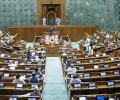
The deportation of Indians from the United States, deaths in the Maha Kumbh stampede and the joint Parliamentary committee report on the Waqf bill were among the issues that led to heated exchanges and some disruptions in an otherwise smooth first part of the Budget session that ended on Thursday.

Health insurance premium growth has slowed after touching record highs during the Covid-19 pandemic due to tapering demand from retail consumers amid affordability issues. According to General Insurance Council data, health insurance premiums grew by 10.44 per cent year-on-year (Y-o-Y) in the Apr-Jan period of FY25 in comparison with 20.79 per cent in the year-ago period. It was around 23.57 per cent in FY23, and 25.89 per cent in FY22.
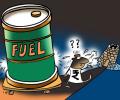
Inflation in the 'fuel and power' basket in December slumped to 8.38 per cent, nearly half of 16.28 per cent.
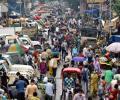
'We have lived through 10% plus inflation in India and we are aware of the economic pitfall.' 'With the RBI now having formally adopted an inflation target range, they cannot turn a blind eye to the impending risks.'

Continuing decline in food prices, including vegetables, pulled wholesale price inflation to a five year low of 1.77 per cent in October.

The wholesale price-based inflation rose to an eight-month high of 1.48 per cent in October, as manufactured products turned costlier. The WPI inflation was 1.32 per cent in September and zero per cent in October last year. This is the highest level of wholesale price index-based (WPI) inflation since February when it was 2.26 per cent.

Slowdown in industrial production notwithstanding, a marginal increase in inflation raised the clamour for another round of rate cut by the Reserve Bank on April 4 to boost economic activity.

Inflation data, global trends and foreign fund trading activity would guide equity market movement in a holiday-shortened week, analysts said. Stock markets would remain closed on Tuesday for Independence Day. "Macroeconomic indicators, rupee and FII activities will be pivotal in shaping market trends in the coming days.

The wholesale price-based inflation shot up to an all-time high of 10.49 per cent in April, on rising prices of crude oil and manufactured items. Also, a low base of April last year contributed to the spike in inflation in April 2021. The WPI inflation was 7.39 per cent in March 2021, and (-) 1.57 per cent in April 2020. This is the fourth straight month of uptick seen in the wholesale price index (WPI)-based inflation.

Benchmark indices ended in the green on Tuesday after retail inflation dipped below the RBI's upper tolerance level of 6 per cent for the first time in 11 months in November. The 30-share BSE Sensex climbed 402.73 points or 0.65 per cent to settle at 62,533.30. During the day, it jumped 437.35 points or 0.70 per cent to 62,567.92. The broader NSE Nifty advanced 110.85 points or 0.60 per cent to end at 18,608.

Tomato prices have been on the boil for more than a month. Data from major cities show that the spike has been between 125 and 150 per cent at the wholesale level. Soaring vegetable prices, including tomatoes, pushed the retail inflation rate to a nine-month high of 5.49 per cent in September, according to government data. Though reports say prices are expected to come down in the next few weeks after supplies improve from Madhya Pradesh and Himachal Pradesh, how long will the respite last is anybody's guess.

In December, the index fell a provisional 0.73 per cent.

Going forward, the February factory output may be impacted as several industries such as automobiles, technology, pharma and fashion have some exposure to imports of raw and intermediate materials from China.

From the Sensex pack, ITC, Titan, Asian Paints, Reliance, Tata Steel, Bajaj Finserv, Axis Bank, Hindustan Unilever, Infosys, Bajaj Finance, Nestle and ICICI Bank were the major gainers. Kotak Mahindra Bank, Mahindra & Mahindra, HCL Technologies, State Bank of India, Bharti Airtel and Tata Motors were among the laggards.
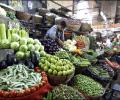
In December 2014, it was (-)0.50 per cent.

Moody's Ratings on Wednesday said India's economic growth will exceed 6.5 per cent in the next fiscal, up from 6.3 per cent this year, on higher government capex and consumption boost from tax cuts and interest rate reduction. Projecting a stable outlook for the banking sector, Moody's said although the operating environment of Indian banks will remain favourable in the next fiscal, their asset quality will deteriorate moderately after substantial improvements in recent years, with some stress in unsecured retail loans, microfinance loans and small business loans.

Inflation in food articles inched up to 0.69 per cent in September.
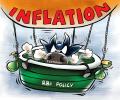
Inflation in food articles basket was 6.99 per cent In May, 2019, down from 7.37 per cent in April. However, onion prices spiked in May with inflation at 15.89 per cent, as against (-) 3.43 per cent in April.
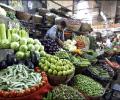
Industrial output had slowed to 5-month low of 2.1% in March.

The Aam Aadmi Party's decision to disallow foreign direct investment (FDI) in Delhi's retail sector has a taker of sorts in economics Nobel laureate Joseph Stiglitz.
According to the global financial services major, inflation may remain sticky, with a possible El Nino effect on the monsoon likely to push up food prices and geopolitical uncertainties seen pumping up global commodity rates.
The central bank is struggling to do so, after unleashing a panicky expansionary policy after the Lehman crisis.
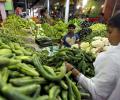
Andhra Pradesh posted 8.14% consumer inflation in October.

Power Grid, HCL Technologies, Asian Paints, Hindustan Unilever, Maruti and Nestle were among the laggards. Shares of HCL Technologies were trading over 1 per cent lower even after the company reported a 7.6 per cent year-on-year rise in June quarter net profit on the back of new order wins.

Vegetable prices which had witnessed a 21.16 per cent contraction in June, shot up by 21.95 per cent in July.

The Wholesale Price Index-based inflation was (-)4.54% in Sep.

Finance minister Nirmala Sitharaman on Wednesday exuded confidence that inflation would further decline and the government is on track to meet its budgetary target for deficit and said that there is no fear of stagflation in India. Replying to the debate on first batch of Supplementary Demands for Grants 2022-23 in Lok Sabha, the finance minister said inflation has come down and it is now in the tolerable band of the RBI. Inflation has been declining since April 2022 and it is declining further, she said.

Maintaining 4 per cent inflation is appropriate for India as targeting a lower rate could impart deflationary bias to the monetary policy, said a Reserve Bank paper. Under the current dispensation, the RBI has been mandated by the government to maintain retail inflation at 4 per cent with a margin of 2 per cent on either side. The paper, authored by RBI Deputy Governor Michael Debabrata Patra and another official Harendra Kumar Behera, has found a steady decline in trend inflation to 4.1-4.3 per cent since 2014.

Hero MotoCorp is expecting its electric vehicle (EV) business to break even once it reaches monthly sales volumes of 25,000 to 30,000 units, which is a couple of years away, Chief Financial Officer (CFO) Vivek Anand said on Tuesday. "This year, in 2024-25 (FY25), if I really look at my EV performance, our volumes have grown by 200 per cent," Anand told analysts during the company's post-results conference call.

In fuel and power segment, inflation saw a sharp surge to a near double digit inflation at 9.99 per cent, against 4.37 per cent in July.

Geopolitical events, macroeconomic data and quarterly earnings of corporates would guide the stock market in a holiday-shortened week ahead, analysts said. Stock markets will remain closed on Wednesday for Ram Navami. "This week promises to be crucial for the market as fresh worries about a potential conflict between Iran and Israel emerge.

The meltdown in Dalal Street that wiped out investor wealth to the tune of 44 trillion in 2025 also seems to be having a ripple effect on the country's vibrant automobile retail sales.

India's retail inflation is the highest among the BRICS group of emerging economies.
WPI-based inflation falls to 5-month low of 6.16%.
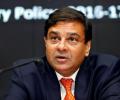
Demonetisation to result in short-run disruptions in cash-intensive sectors like retail, hotels, restaurants and transportation, RBI said while announcing the Monetary Policy

The RBI targets inflation at 6 percent by January 2016 and 4 percent for 2017/18.

US strikes on Iran's three main nuclear facilities have once again raised concerns that Tehran might shut down the Strait of Hormuz - one of the world's most critical chokepoints, through which a fifth of global oil and gas supply flows.

India's annual industrial output grew at a slower-than-expected pace of 3.6 percent in September.
What came to the rescue of the IIP numbers in February were mining and electricity.
